

Montilivi, Girona, Catalunya, Spain
Year established: 2013
Website/social media: Click here
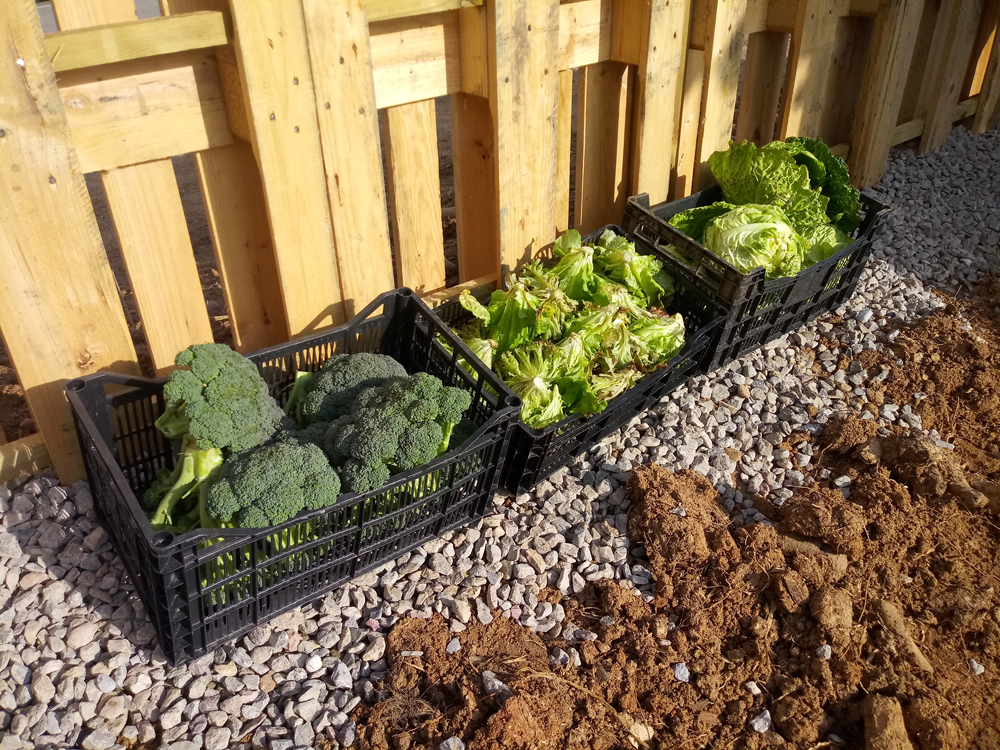
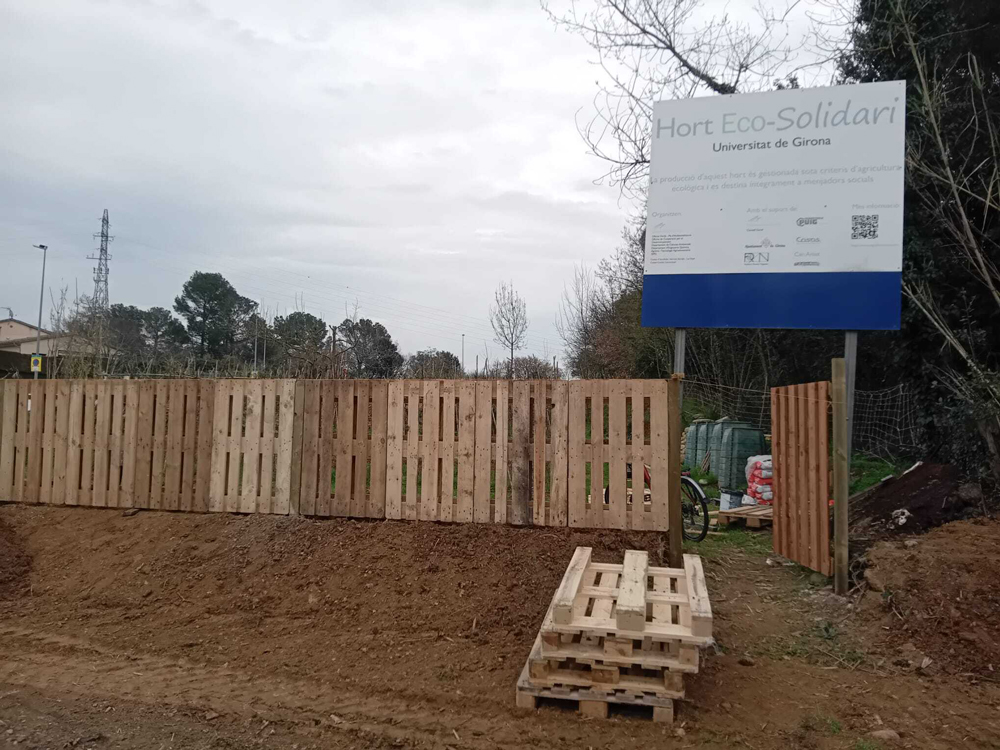
The University of Girona's Ecosolidary Garden was established in 2013, promoted by the Unit for Social Commitment and Professional Guidance and the Green Office for Sustainability, through the temporary use of land originally intended for the future expansion of the campus. The project emerged in the context of the 2008 economic crisis, with the aim of giving social and sustainable value to an unused space. From the outset, it combined food production with cooperation, sustainability, and social inclusion, in collaboration with organisations such as La Sopa and the Ramon Noguera Foundation. Initially, the food produced was donated to La Sopa's social dining service, while the garden was maintained by university volunteers. Over time, the project evolved into an educational and pedagogical space where students and people in vulnerable situations share knowledge and experiences. The Ecosolidary Garden strengthens the University of Girona's social commitment through teaching, research, and knowledge transfer. It stands out for integrating environmental sustainability with social inclusion and community engagement. Unlike most university community gardens, it works directly with vulnerable groups. This makes it a unique initiative in Catalonia and an outstanding example of university social responsibility.
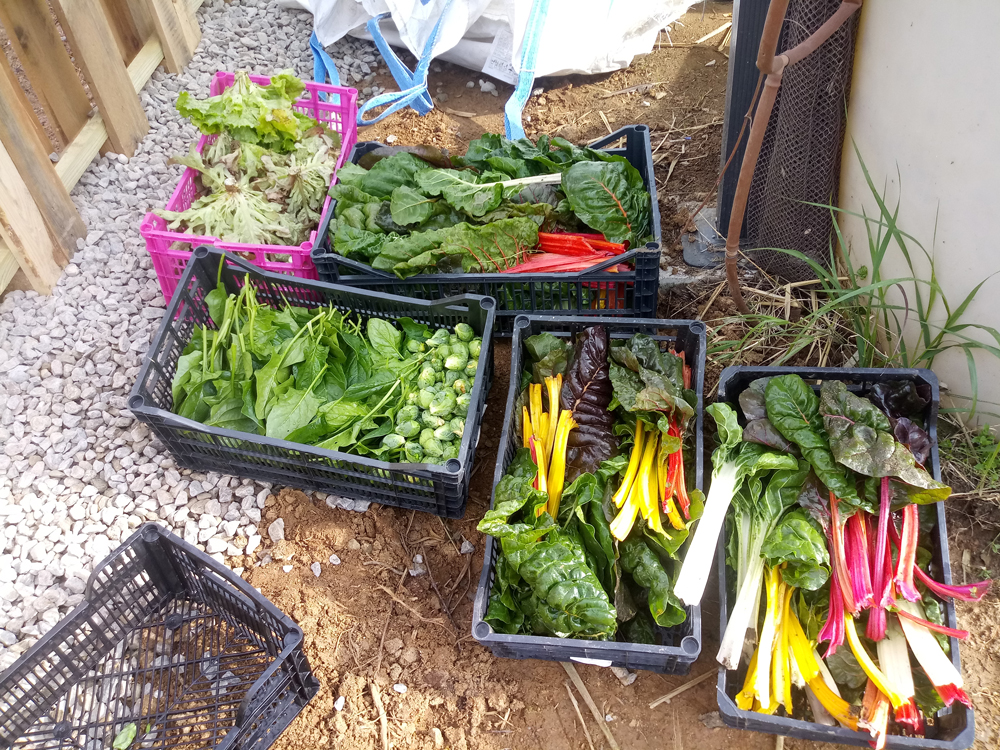
The Ecosolidary Garden is inspirational because it brings together social inclusion, healthy food, environmental education and university learning in one practical initiative. Unlike many university gardens, it works directly with people in vulnerable situations while also supplying fresh organic produce to a social dining service. The garden is also used for volunteering, teaching, research and experimentation with agroecological methods. Its value lies not only in what it produces, but in how it turns an unused campus plot into a shared space for learning, care, cooperation and social responsibility.
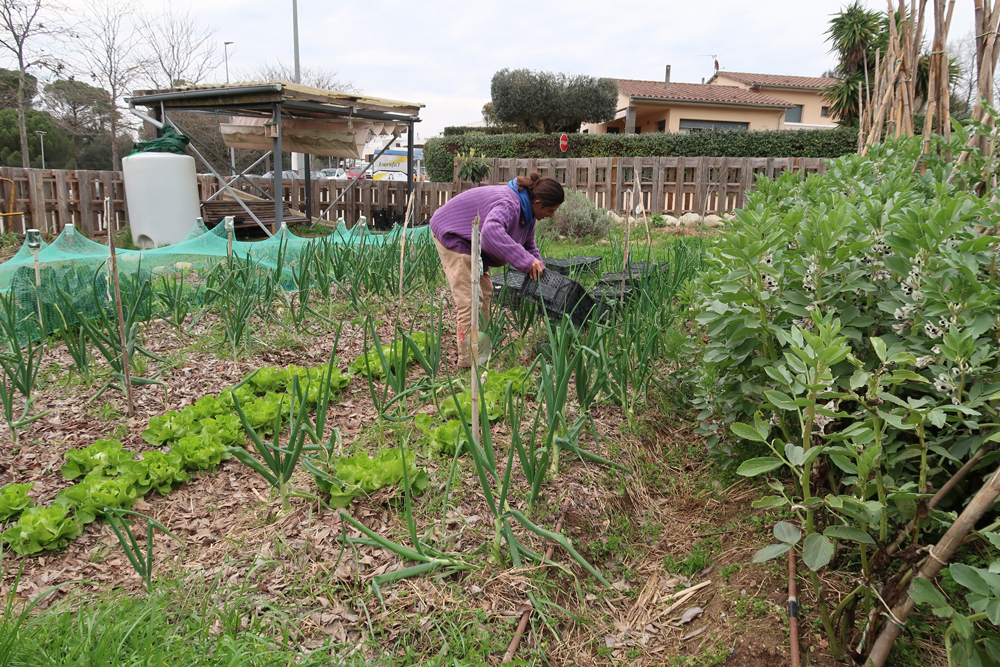
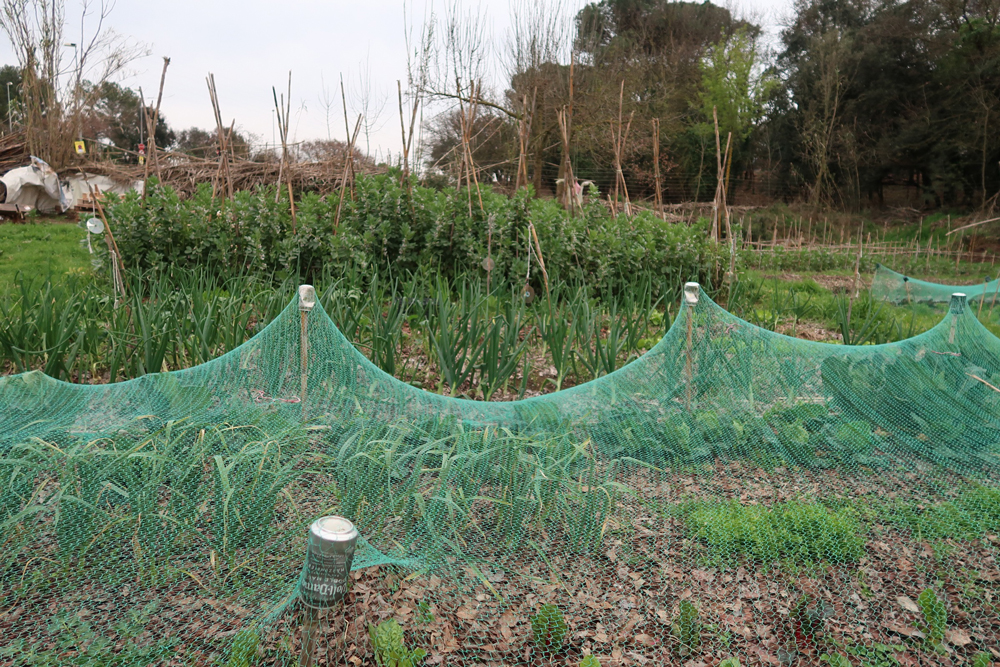
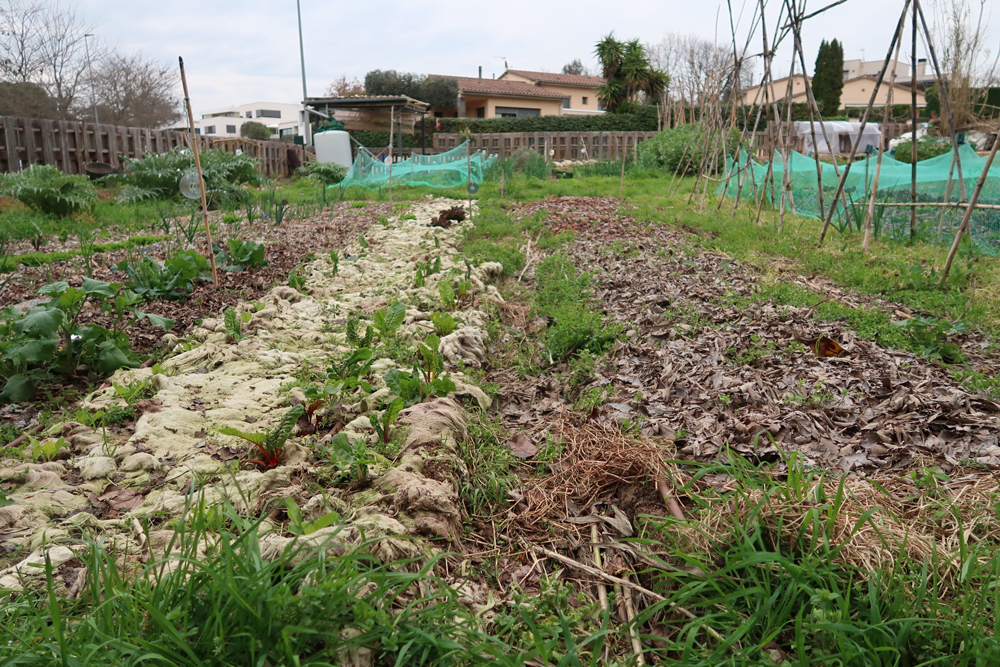
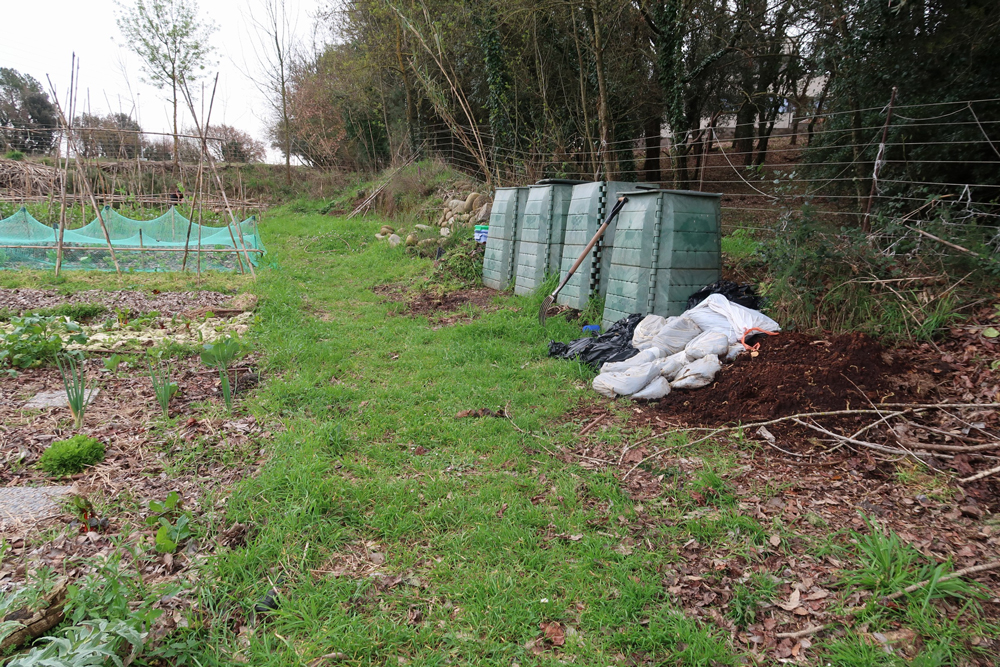
The Ecosolidary Garden supports sustainability by applying agroecological and regenerative farming principles that promote biodiversity, crop rotation, local varieties, and the protection of pollinators. It acts as a living laboratory where sustainable cultivation techniques are tested, while also supporting university research, education, and awareness-raising on more resilient food systems. The project follows circular economy principles by reusing materials, closing organic matter cycles, collecting and reusing rainwater, composting organic waste, and avoiding synthetic chemical products.
The Ecosolidary Garden is anchored within the University of Girona’s organisational structure and connected to a wider local network through ongoing collaboration. The University provides the land, coordination, student volunteering and links to teaching and research. Fundació Ramon Noguera organises the weekly participation of its users and an educator, while La Sopa collects the produce and distributes it through its social dining service. It provides seeds for the garden and collects the food baskets produced there. In some moments, the users may contribute to cultivation tasks. The garden also collaborates with the UdG Agroecology Group, schools, lecturers, researchers and other local and regional organisations. Most of these relationships are maintained through flexible cooperation rather than formal agreements.
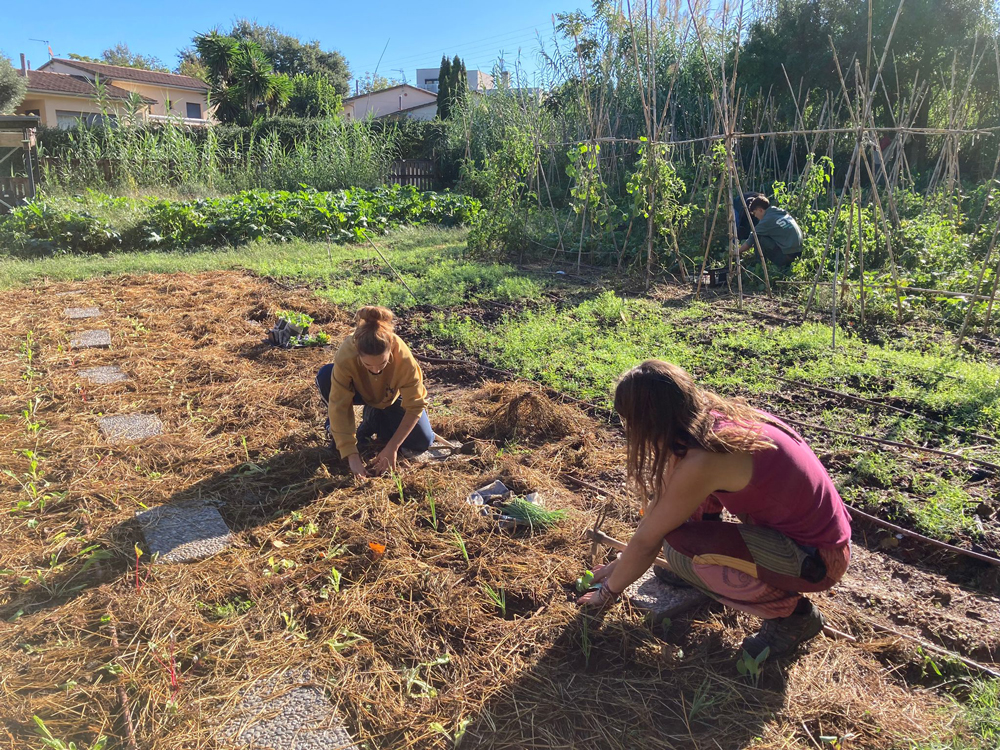
University students take part as volunteers, gaining practical experience and academic recognition, while lecturers and researchers use the site for teaching and experimentation. Young people from Fundació Ramon Noguera attend weekly to carry out adapted gardening tasks with the support of an educator. La Sopa and the people who use its social dining service benefit from the fresh organic and high-quality vegetables produced there. Schools, children and visitors also take part in educational and public activities.
Social inclusion is addressed through both active participation and improved access to healthy food. Young people with intellectual disabilities from Fundació Ramon Noguera take part every week in meaningful gardening activities, with tasks adapted to their abilities and supported by an educator. At the same time, the vegetables grown in the garden are supplied to La Sopa’s social dining service, improving access to fresh, organic food for people experiencing homelessness, social exclusion or other forms of vulnerability. The project is also working to make it easier for La Sopa’s users to participate actively in the garden again, as they did in earlier periods, strengthening social connection, practical learning and a sense of belonging.
You can download our full case study, along with all the other case studies here.
“Students who volunteer teach other volunteers”
Luca, temporary UdG coordinator of the project
“The Ecosolidary Garden includes varieties that may not be conventional, and the way they are produced gives them a much higher nutritional value. Providing organic and sustainable food in a social dining service is quite unthinkable unless it is through a project like this. In fact, it is something that greatly enriches the project”
Adrià, project supervisor
“Having this small project at the University of Girona is an example of the need for an agri-food transition, because the current system is not at all sustainable and is not resilient in the face of what may happen in the coming years. At the global level, there are many actors and factors that will need to work together in order to withstand the coming storm”
Adrià, project supervisor
“It was quite a valuable experience for our users”
Carles, director of La Sopa. Centre for Reception and Social Services of Girona
“They cannot take part in an ordinary environment unless the objectives of commitment and consistency in the task are worked on. We go to the garden to do a job, not to go for a stroll”
Esther, coordinator of activities at the Occupational Therapy Service at Fundació Ramon Noguera (FRN)