

Athens, Greece
Year established: 2020
Website/social media: Click here
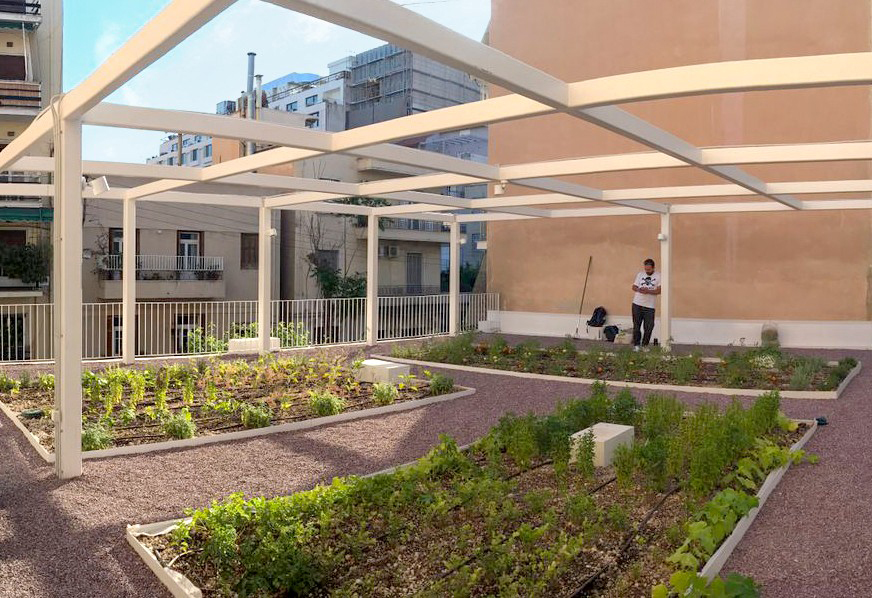
Trofý.Lab is an urban farming initiative focused on advancing sustainable food systems through circular design principles. TrofyLab aims at creating alternative food supply chains, by bringing food production in the urban fabric. Trofý.Lab operates primarily within the region of Attica, Greece, with a strong presence across the metropolitan area of Athens.
Drawing on expertise in regenerative agriculture and permaculture, the organization develops innovative solutions that strengthen green infrastructure and foster community engagement. Trofý.Lab contributes by integrating nature-based solutions, circular food practices, and open-source technologies to support urban resilience and sustainable food production.
The activities of Trofý.Lab can be grouped into four main clusters:
This case is one of the successful organizations related to urban gardening in Athens, and it is interesting to examine what has helped it be extroverted and impactful.
Trofý.Lab promotes the concept of prosumerism, encouraging citizens to actively participate in food production within urban environments. This approach addresses broader issues related to industrialized food systems, including the environmental impact of long supply chains, the use of chemical inputs, and the prevalence of processed food.
Trofý.Lab collaborates with cultural institutions and design practitioners to bridge the gap between cultivation, aesthetics, and sustainability.
This case is helping to look into issues like innovation practices in the food sector and their sustainability, and the role of governance and legal status in the financial sustainability of a project.
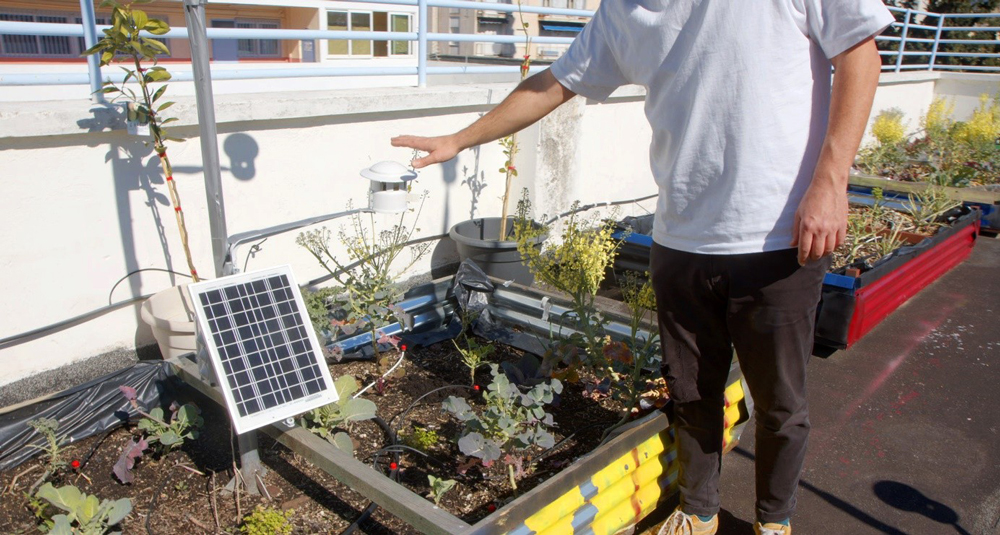
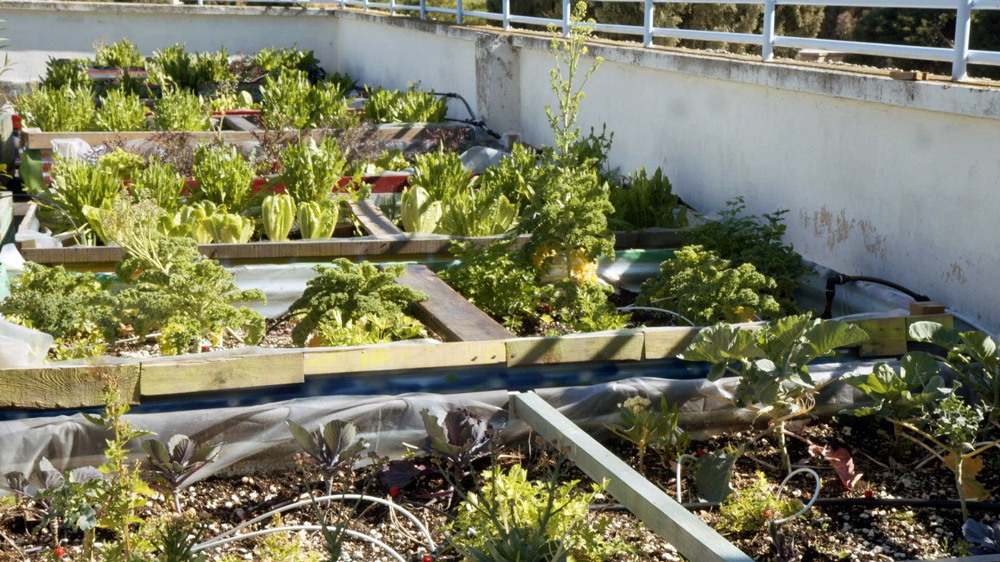
Trofý.Lab’s work directly responds to several pressing urban challenges, including high density, limited open space, and climate-related impacts such as increased temperatures. Urban gardens are configured to provide shade, mitigate heat, and contribute to localized cooling, thereby addressing urban heat island effects. In addition, plant selection can support broader ecological functions, such as improving air quality and enhancing biodiversity. Technological tools developed by Trofý.Lab further support sustainability goals by enabling precise monitoring of plant conditions and optimizing water use. Crop selection also reflects sustainability principles, prioritizing local and climate-resilient species. Seed-saving practices and collaborations with suppliers of organic compost further reinforce a regenerative approach to cultivation.
By integrating food production into urban environments, the organization contributes to reducing the environmental footprint of food systems. Its projects are grounded in principles of circular design, incorporating composting, permaculture practices, and resource-efficient systems that minimize the need for external inputs such as chemical fertilizers and pesticides.
Material use and construction methods are approached with an emphasis on efficiency and adaptability. Structures are designed to minimize waste, using simple construction techniques and, where possible, reclaimed materials.
Torfy.Lab was created by Petros Petros Kartsimadakis. The organization collaborates closely with the local municipality and with schools, while also exploring opportunities for deeper partnerships. Trofý.Lab is embedded within a wide network of organizations and initiatives related to alternative food systems, commons-based approaches, permaculture, degrowth and circular economies. These include participation in platforms and networks such as Impact Hub, Open Food Network, the good market commons, Synallois and Mpostani, as well as partnerships with cultural institutions (Onassis), schools, and suppliers. Engagement in festivals and public events like Amalthea or S+T+Arts forum or Circular Economy Fair further contributes to the visibility and dissemination of its work.
At the local level, Trofý.Lab develops context-specific interventions, tailoring design, materials, and partnerships to each site. The scale of its physical interventions remains relatively small, reflecting both the localized nature of its work and structural constraints within the Athenian context. In particular, the limited integration of urban agriculture into municipal or regional policy frameworks currently restricts opportunities for expansion at a larger scale.
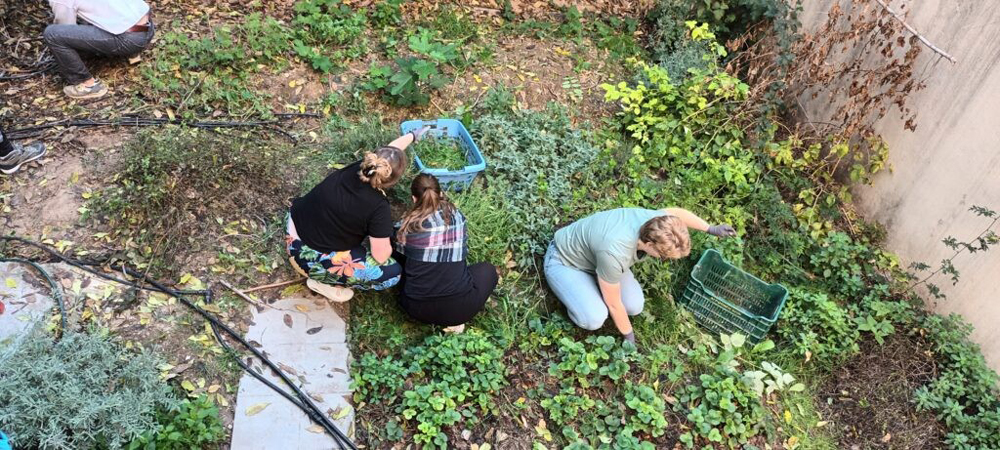
All garden implementations developed by Trofý.Lab are grounded in participatory processes, supported by workshops involving the relevant stakeholders—whether students, residents, or employees. Continuous communication and awareness-building are integral to these processes, ensuring that each project reflects the needs and capacities of its users. Users are encouraged to take responsibility for the long-term care and maintenance of the gardens, ensuring their continuity beyond the initial implementation phase.
The users and beneficiaries depend on the project. It can be a community, students, residents, employees, clients. All garden implementations developed by Trofý.Lab are grounded in participatory processes, supported by workshops involving the relevant stakeholders.
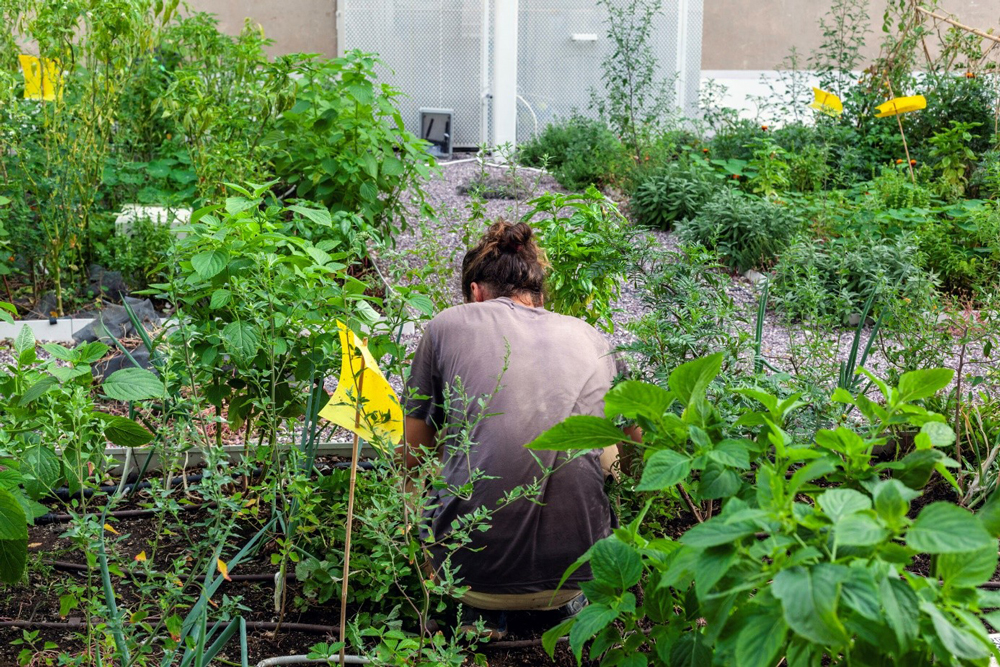
Its projects emphasize participation (of the students, the clients, the users etc) , empowerment, and community connection, positioning urban farming as a form of stewardship over shared and public spaces. These initiatives often create environments that are not only productive but also therapeutic, encouraging collective engagement and a sense of ownership. The inclusivity of Trofý.Lab’s projects is closely linked to the nature of its collaborations. Many initiatives are designed with accessibility and affordability in mind, aiming to involve diverse groups, including marginalized or vulnerable populations. Through participatory processes, communities are encouraged to actively engage in food production, strengthening social ties and promoting knowledge exchange.
Community gardens, especially when developed in collaboration with municipal authorities, have the potential to reduce social segregation by creating shared spaces that bring together individuals from different backgrounds. In this way, urban agriculture becomes a tool for reinforcing social cohesion and enabling more inclusive urban environments.
You can download our full case study, along with all the other case studies here.