

Faversham, Kent, United Kingdom
Year established: 1994
Website/social media: Click here
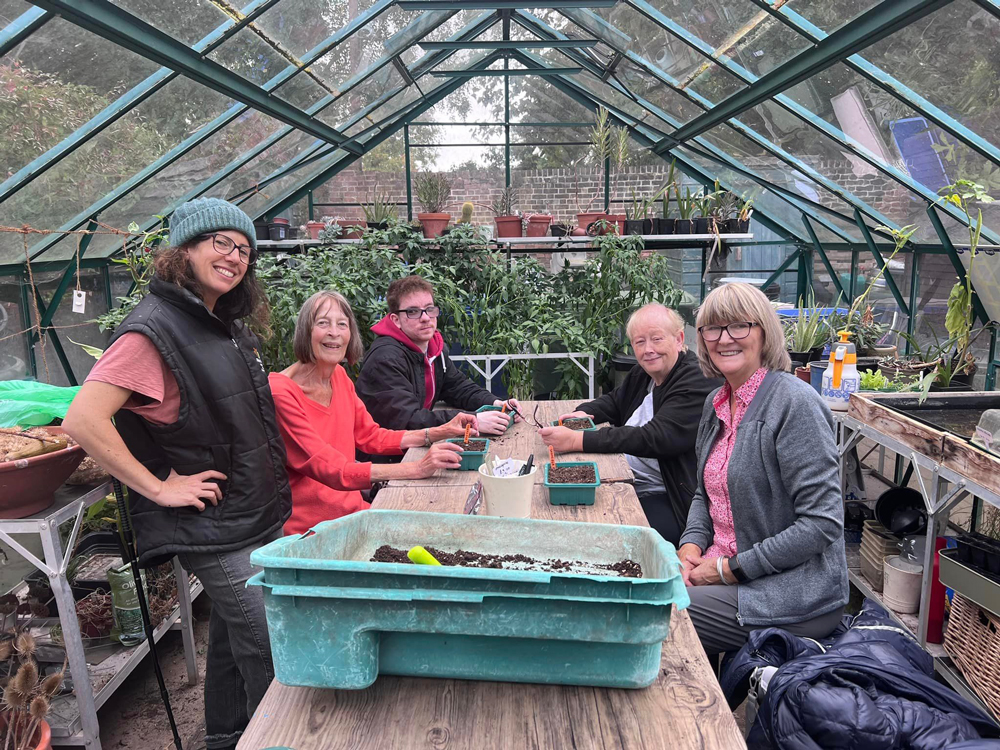
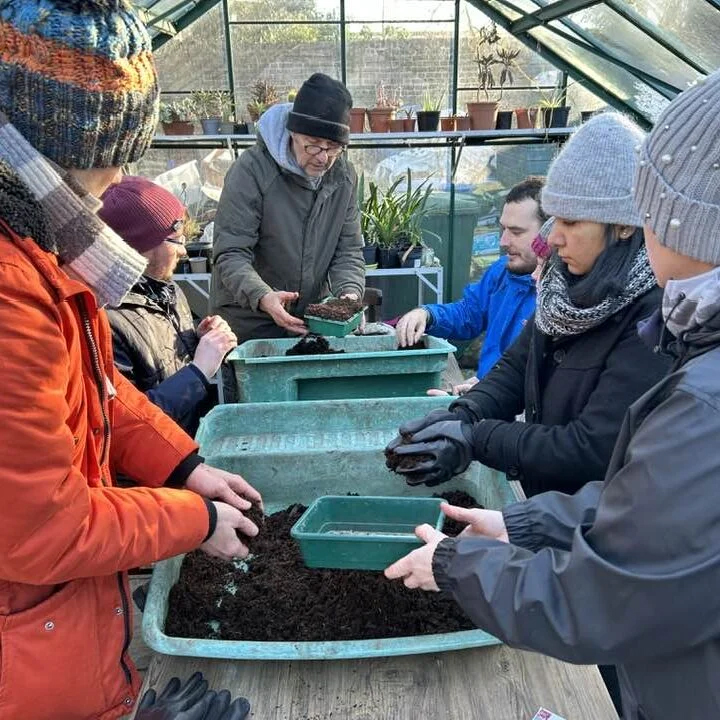
Abbey Physic Community Garden is a charity-based organisation, based in Faversham, Kent. It is a half-acre walled garden, which aims to reconnect people with nature to enhance mental and physical wellbeing. Although they originally functioned as a therapeutic garden for patients with mental health difficulties, it has evolved to additionally cater to the concerns and needs of the community. Today, these focuses also include social inclusion, food security, community welfare and skill building. This is demonstrated through their activities at the gardens, such as garden and skills volunteer programmes; skill strengthening courses; clubs promoting community engagement; and areas for people to connect, like the community cafe.
One of the most interesting features of this case study, is their ability to adapt their operations and activities to cater to the needs of the community, especially to those which are considered vulnerable. This is specifically shown from their evolution as a project that now also includes the wider public.
Their activities further, promote and teach how food and permaculture can be used as methods to improve mental wellbeing, self-sufficiency, and bring people together. Within recent years, issues within Faversham circulated around loneliness and affordability from the cost-of-living crisis. The response of APCGs, was to create spaces and solutions without associated stigmas, that allowed for members of the community to connect, who would not usually get the chance to. Creation of clubs, such as the Men’s Shed, promotes a safe space to speak about mental health issues without prejudice. Having a men’s breakfast club once a week, incorporates food into these issues, showcasing how it can be used as a medium for engagement.
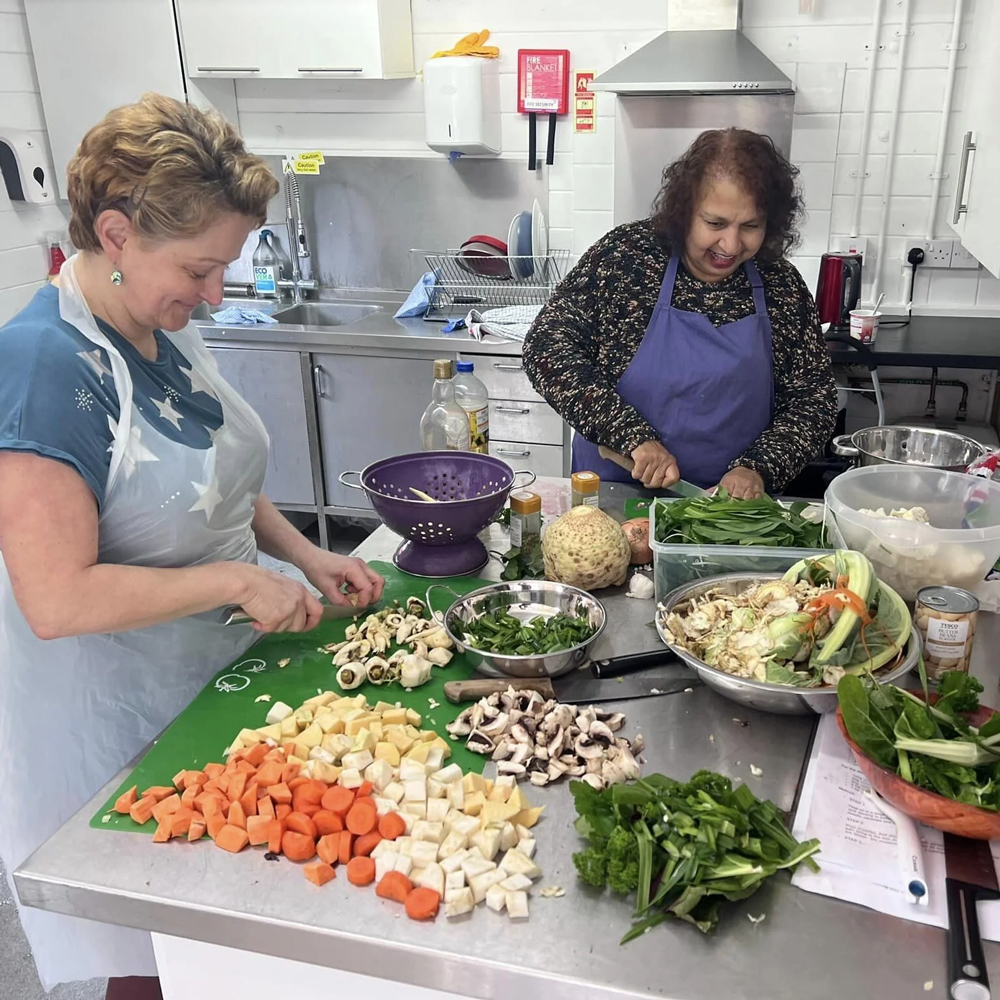
It also promotes members to act autonomously and use the skills that they have learnt within their daily lives. For example, the Mindful Kitchen course, is adapted to the needs of the participants at the time. They could be taught skills such as meal prepping, preservation techniques for continued use of seasonal produce, or recipes with leftover ingredients, for example.
These activities, showcase how the staff involved can harness and adapt their skillset to create a true difference to their community.
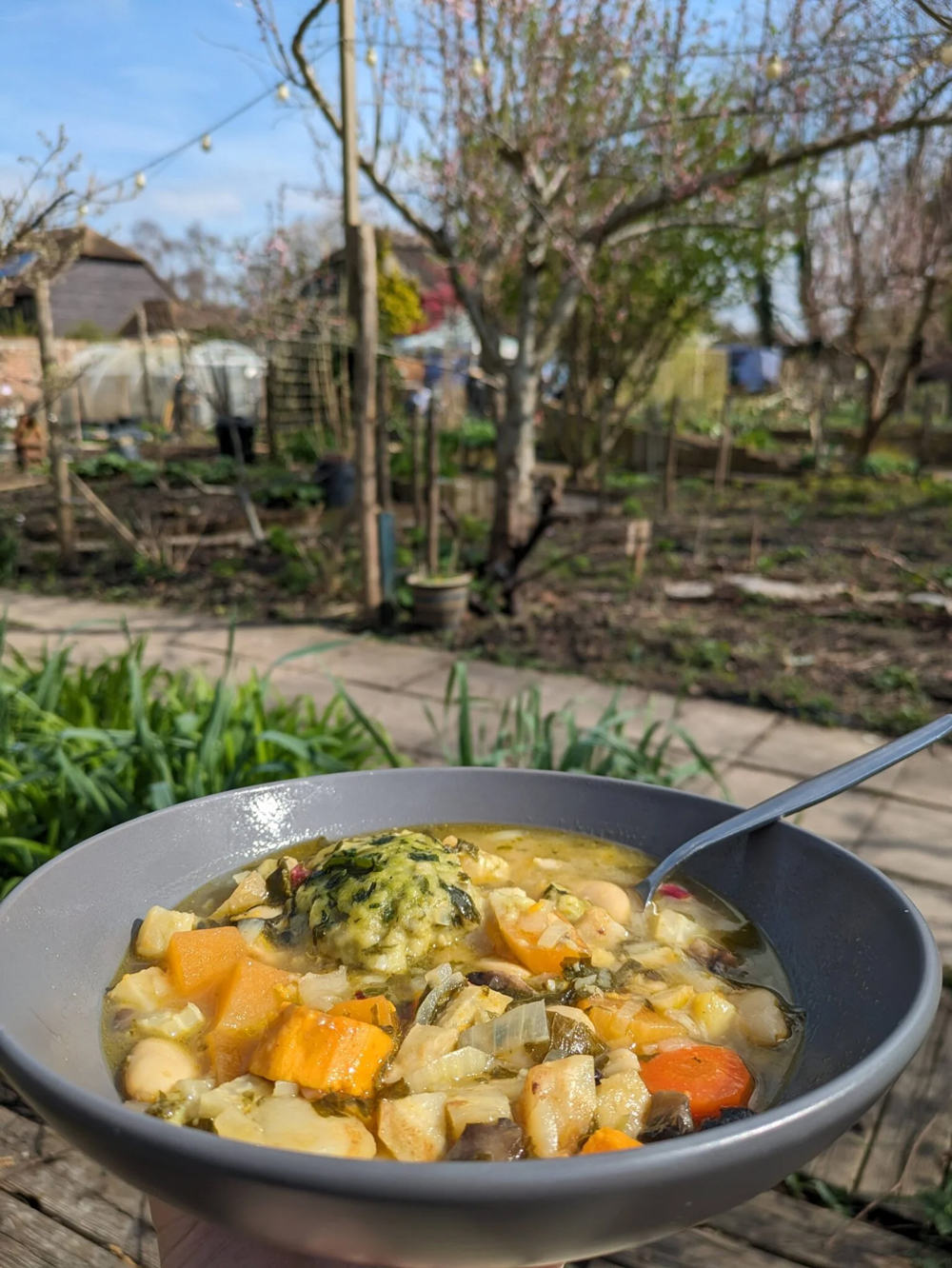
APCG adopts principles of permaculture and circularity to promote sustainability within its activities. More recently, an idea of “unshopping” is being explored, whereby a maximum usage of the garden and produce is utilised, so there is less waste and less resources outwardly purchased. This is translated to the community, through courses run by experts in the garden on foraging. Additionally, participants are taught how to use what they have found through the garden, such as preparing tea from nettle plants, or making fertiliser from banana peels.
The ingredients which are used within the cafe are, where possible, grown in the garden. It promotes therefore, a 0km supply chain, where organic farming is practised.
Operating as a charity-based organisation, the internal structure is made up of 8 part-time staff members and a board of 8 active trustees. These are the main stakeholders who are responsible for the management and upkeep of the garden and its activities. Working synonymously together, the trustees roles more pertain to the governance and business side of operations, whilst the staff members are responsible more for the day-to-day management and activities of the garden. Community participation is highly accredited and contributes massively to the success of the gardens also. For example, the garden is open on Saturday, because it is run entirely through volunteers.
Collaborations within the local network, are fostered predominantly with other organisations to make projects that will benefit the community. There are additional organisations which collaborate to provide referrals for people who wish to come to the garden to improve their mental wellbeing. These are organisations such as MIND, Age UK, Live Well Kent, as well as General Practitioners and carers from healthcare organisations
The garden is considered an open space, where anyone can come to the cafe, or volunteer within the gardens. Although some activities do require more formal registrations and referrals, there is no restrictions or exclusions, and demographics of those in attendance tend to change over time, depending on who is partaking in specific courses at that moment. Because of this, there is no clear or specific target demographics, rather an understanding to promote inclusivity and increase opportunities for those more vulnerable within the space.
Although once predominantly focusing on those with mental health issues, the APCG prides itself on being inclusive and accessible to the whole community. This is promoted through their diversity in activities and further consideration of obstacles some of their visitors could face. For example, specific days of gardening are held with those that are neurodivergent or have special needs, with trained staff members, so that they can have the correct mentorship . Economic constraints from community members are also considered, through the creation of their pay it forward scheme in the cafe, titled “Love Lunches”. This allows for those to enjoy the food made without associated stigmas surrounding money. Additionally, some activities have specific target audiences in mind, such as the Men’s shed or the women’s defence lessons, which promotes a feeling of belonging and a safe space. It also means, that many people are able to engage with one another which would not have had the opportunity to beforehand. Advocating for social cohesion, APCG strives to bring the community of Faversham together.
You can download our full case study, along with all the other case studies here.
“So we very much go down the health and well-being route, especially people taking responsibility for their health and wellbeing and to not just rely on stuff that's in the supermarket and it's cheaper and it's more fun and it's just incredible. And they pass it on to other people as well. That's, that's the crucial thing.”
Suzanne
“So not institutionalised, but where anybody can come here and nobody would know why or what for. It's none of their business, but everyone could come and participate at their level just to grow confidence, resilience, and because of the benefits, health and wellbeing benefits of being outside in nature.”
Suzanne